
Science activities
Learn more about science and engage in fun hands-on and digital ways to experience learning. Explore some of our recommendations from proving mathematical theorems in the sand to looking up at the night sky.
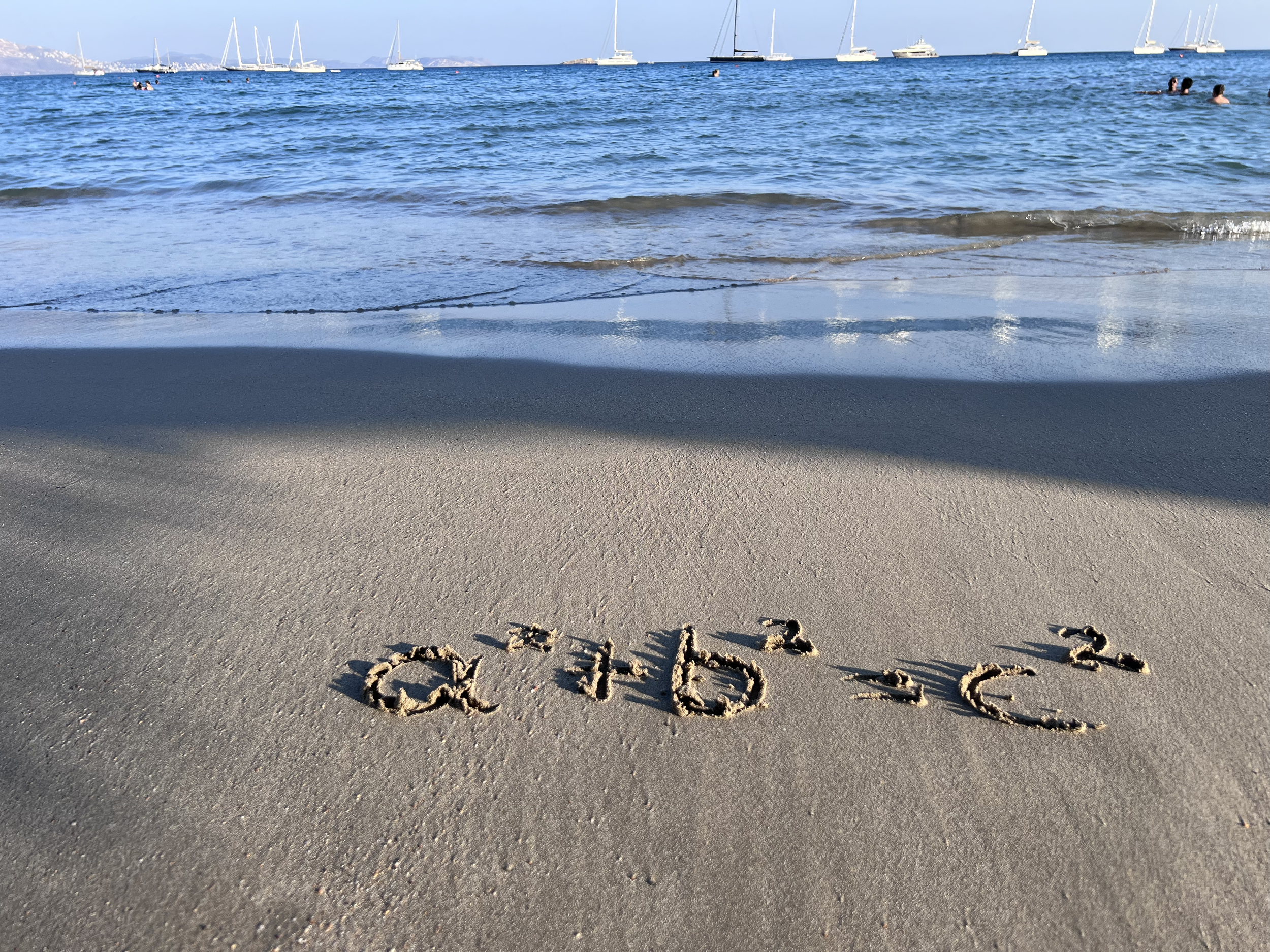
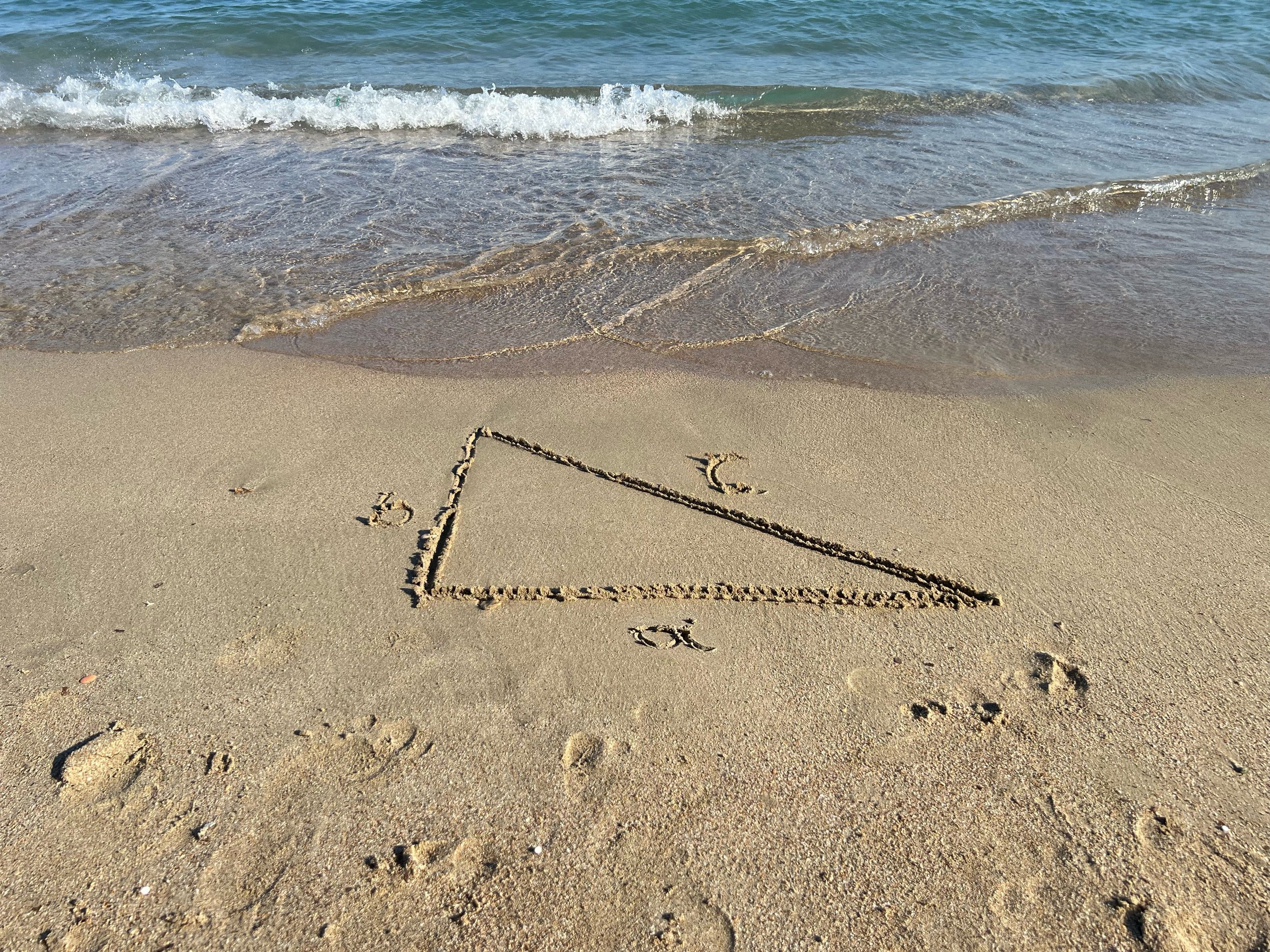
Do math on the beach like Pythagoras
Have you ever wondered how sandy beaches may have looked like blank canvases for ancient philosophers and scientists? Find a stick, or use your fingers and toes, and attempt to prove the Pythagorean theorem.
Mathematics and geometry are conceptual methods to study the natural world around us. Take the opportunity wherever you are to apply science and learning - from writing on a sandy beach, to explaining the laws of motion with a ball, as in the section below.
If you’d like you can share your sandy art and science with the hashtag #mathonsand, so you can inspire more people to find fun in doing math.

Prove the Pythagorean Theorem
Did you know that the Pythagorean theorem is actually only one of many different ways to prove the relationship between the sides of a right triangle? The Pythagorean theorem is the most well-known version, but it can also be proven using large squares, smaller triangles, and even circles. In fact, there are nearly 400 known proofs! Do you think you could come up with a new method?
Download the cutouts we have prepared and assemble them together to prove the Pythagorean theorem.
Observe the natural world around you like Newton
Although the story of the apple falling on Newton’s head is likely a dramatization of what really happened, observing the world around him is what inspired Newton to postulate his laws of motion; for example, watching how apples fall straight down from a tree. Here are some ideas by Scott Bigler, PhD on how you can observe the world around you and experience Newton’s three laws of motion yourself:
Newton’s First Law: Inertia
-
An object will only change its motion when it is acted upon by a force. This means that a stationary object will not move until a force is applied to it, and a moving object will only change speed or direction when a force is applied to it.
-
Place a ball on a flat level surface so it stands still. Until you push on it, it will not move. Once you do push it, it will continue rolling until it hits something or falls off the table.
(Note: Friction between the ball and table means that the ball will not roll at exactly constant speed)
Newton’s Second Law: Force
-
The acceleration of an object depends on the mass of the object and the amount of force applied. The heavier something is, the more force it will take to move or stop it.
-
Take two balls of different weights, for example a golf ball and a tennis ball. When you hold each out in front of you, it will be harder to hold the heavier ball because it takes more force. If you then try to toss each ball up in the air to the same height, it will also be harder with the heavier ball. This is because the acceleration due to gravity is the same on all objects, so the ball with more mass takes more force to hold and throw up against gravity.
Newton’s Third Law: Reaction
-
For every force, there is an equal and opposite reaction force. This means that one object cannot influence another without being affected itself.
-
Toss a ball in the air. You feel force in your hand and see the ball moving; the force on your hand is the same force being applied to the ball to make it move. When you catch the ball you again feel the force in your hand which is required to make the ball stop falling.
Explore the night sky like Hubble on the NASA website
Visit the NASA website and explore the light, night sky, and the universe as seen by Hubble. At the Messier or Caldwell catalog you can see Hubble’s views of the galaxy. Even if your child is too young to understand or discuss some of the scientific concepts it can still be mesmerising to see real pictures of the twinkling stars in our galaxy.
Attempt the trivia. This is more advanced, but is still an excellent resource with information about Hubble’s work. Even if your child is too young for the trivia, the imagery alone of the galaxy that can be found at the NASA website can inspire children to learn more about what they read and to seek more information. Answer the questions and then watch the videos to see the answers.
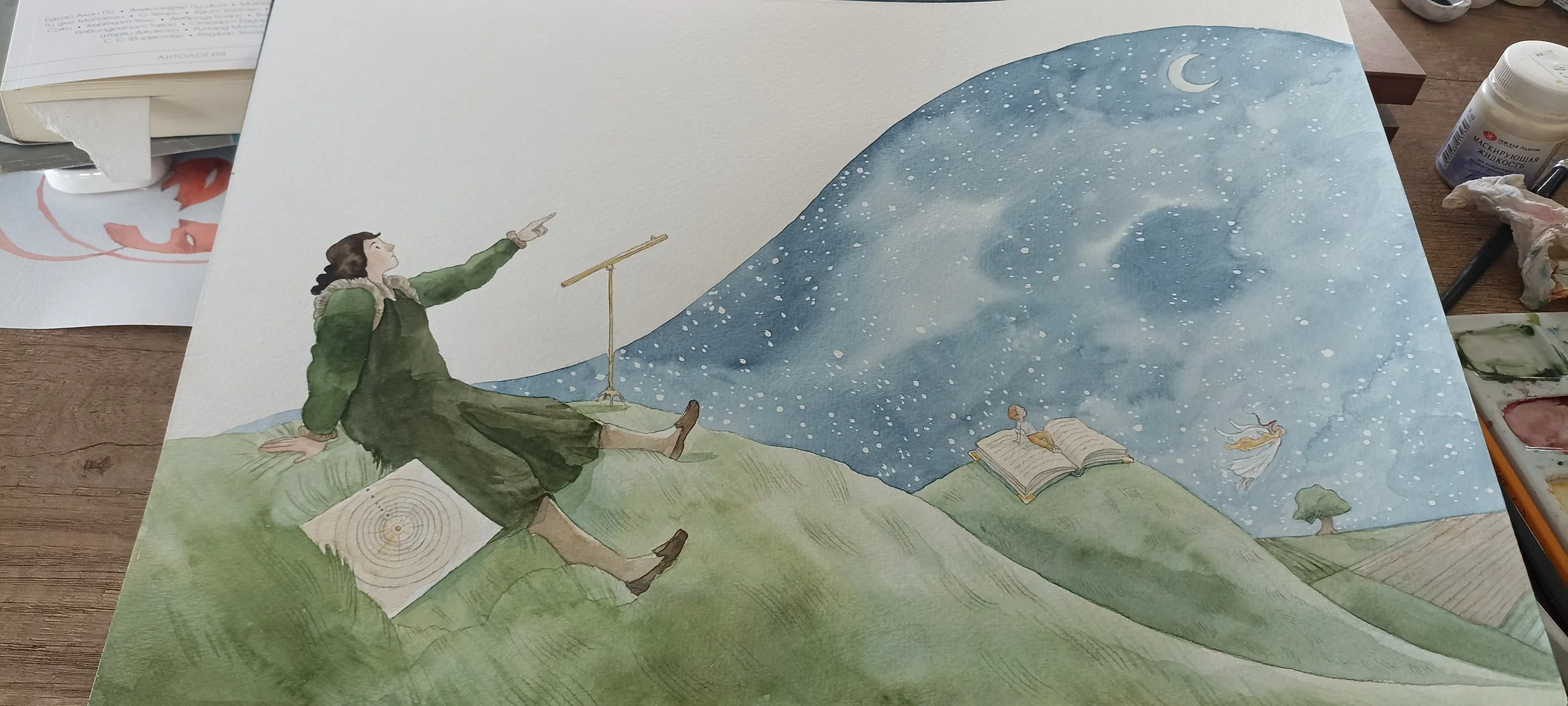
Observe the night sky like Copernicus
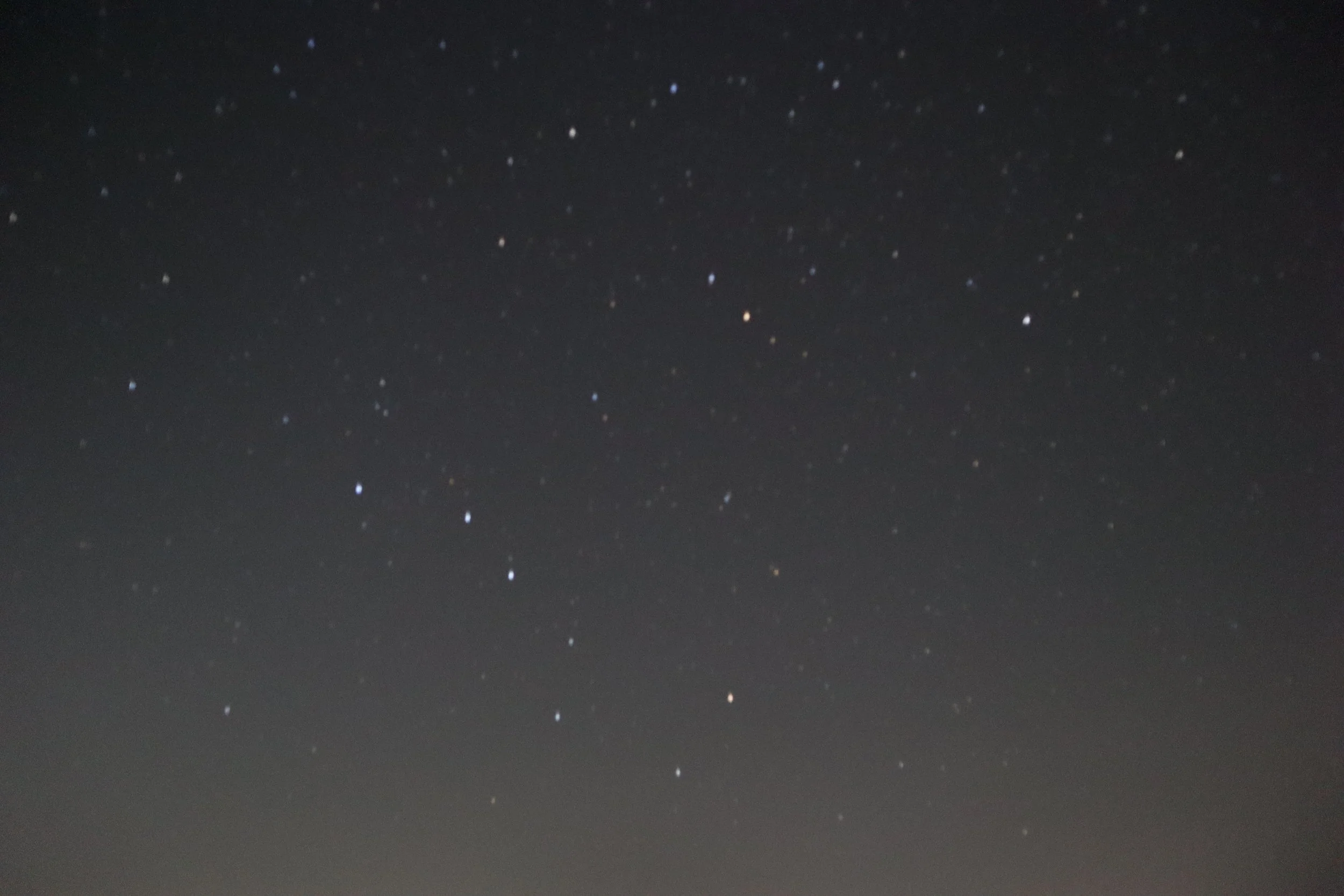
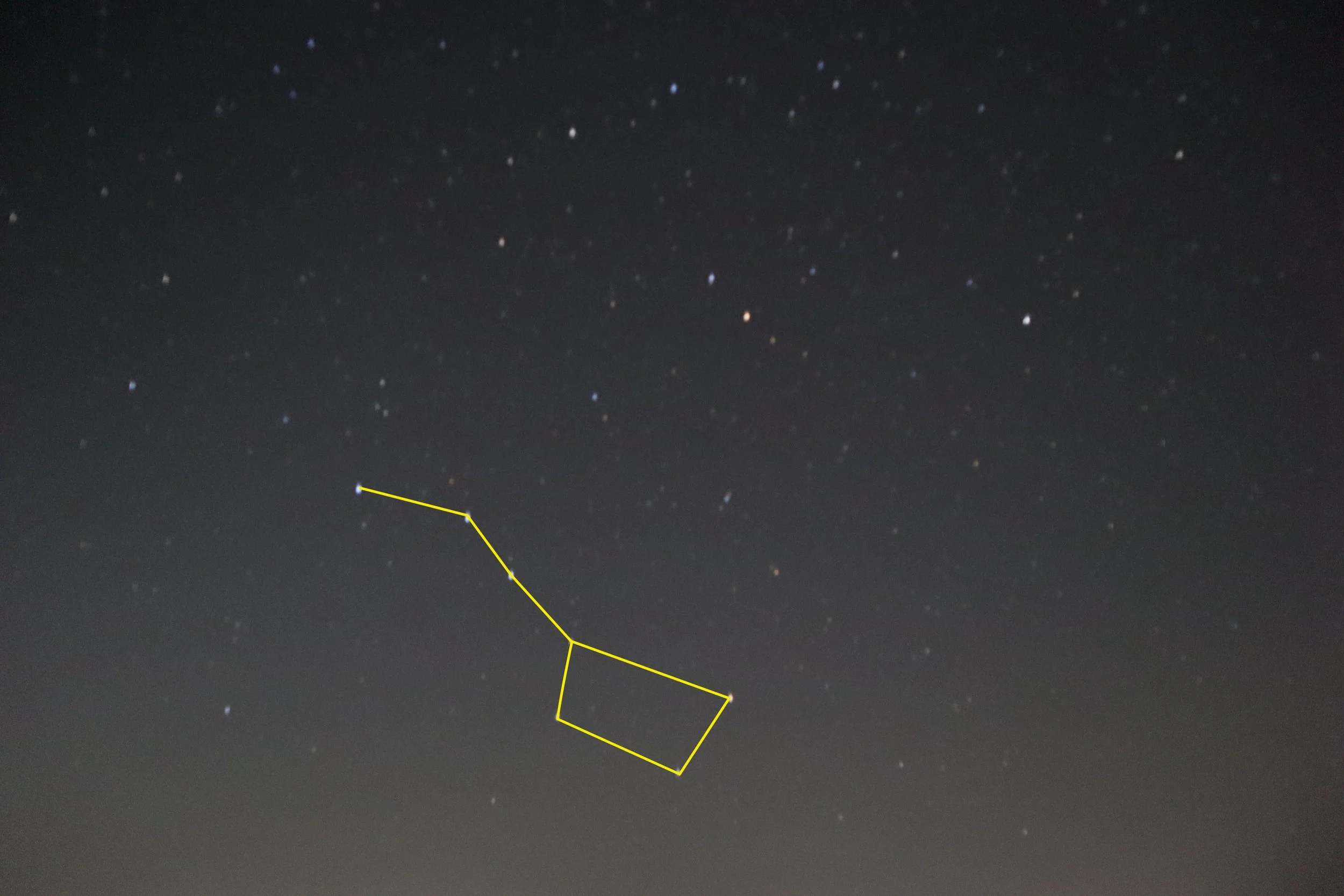
One of my most memorable activities with my grandparents was sitting on the patio at our summerhouse in Greece after dinner and looking up at the night sky. My grandparents would point to star constellations, such as the Great Bear in the northern sky, and explain them to me; although I can’t always discern the constellations as well these days, I always still look up at a clear night sky in wonder.
Curiosity and knowledge need not be instilled by complex activities, but by finding inspiration and wonder in the simplest moments. This is a view of the night sky as seen by my summerhouse, the same sky I grew up looking at. Can you spot the big bear constellation?
“Remember to look up at the stars and not down at your feet. Try to make sense of what you see and wonder about what makes the universe exist. Be curious. And however difficult life may seem, there is always something you can do and succeed at.”

Discuss about more discoveries and ideas
The top ten discoveries illustrated in the book are not an exhaustive list, they are merely the beginning. Discuss with your children about more discoveries, theories, and concepts that you find important. You might want to look at contributions from your own country in sciences, literacy and the arts; you might want to look at female role models (one of the most renowned female scientists is Marie Curie for her work on radioactivity); you might want to learn about specific concepts such as money as exchange currency, or stocks. The most important aspect is to talk about things that matter and discuss as a family so you can introduce your children to important concepts and ideas early in their life.